
Home > Electric Forklift vs Diesel Forklift: Which One Is Better for Your Business?
Choosing between an electric forklift and a diesel forklift is one of the most common decisions businesses face when purchasing material handling equipment. While both types are designed to improve lifting efficiency and warehouse productivity, they are built for different operating conditions, workloads, and industrial applications.
There is no single forklift solution that fits every business. The right choice depends on factors such as the working environment, operating hours, load requirements, maintenance expectations, and long-term operating costs.
Understanding the differences between electric and diesel forklifts can help businesses make a more practical and cost-effective investment decision.
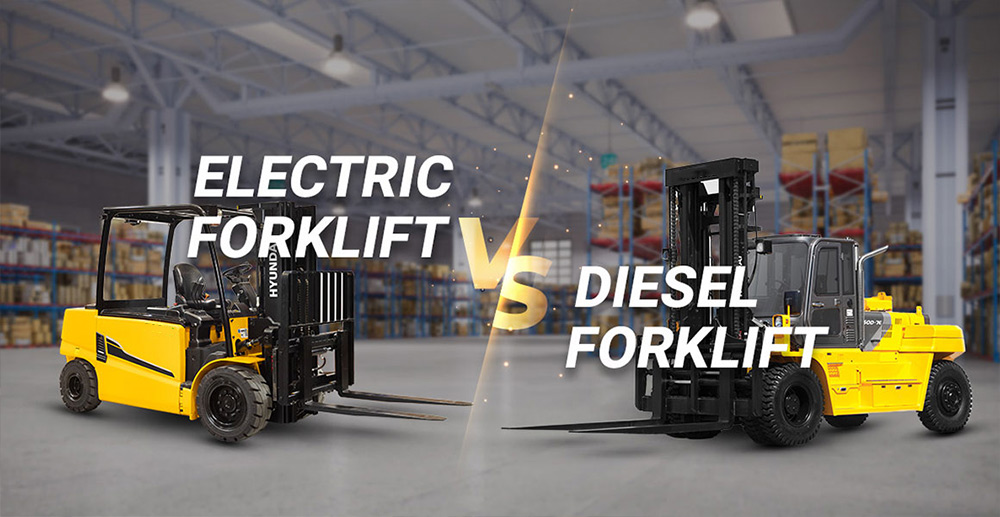
Understanding the Main Difference
The most obvious difference between electric and diesel forklifts is the power source.
Electric forklifts operate using industrial batteries and electric motors, while diesel forklifts rely on internal combustion engines powered by diesel fuel. Because of this, the two forklift types perform differently in terms of power output, emissions, maintenance requirements, operating costs, and application suitability.
Electric forklifts are commonly used in warehouses and indoor environments, while diesel forklifts are more frequently seen in outdoor operations and heavy industrial applications.
However, modern technology has gradually narrowed the performance gap between the two, making the selection process more dependent on operational needs rather than simply power preference.
Electric Forklifts
Cleaner and More Suitable for Indoor Operations
One of the biggest advantages of electric forklifts is their environmentally friendly operation. Since they produce no exhaust emissions during use, they are highly suitable for enclosed spaces such as warehouses, factories, supermarkets, and logistics centers.
In industries where cleanliness and air quality are important, electric forklifts are often the preferred option. Food storage facilities, pharmaceutical warehouses, and electronic manufacturing plants frequently rely on electric material handling equipment to maintain cleaner operating conditions.
Another important benefit is lower operating noise. Electric forklifts generally run much quieter than diesel models, creating a more comfortable working environment for operators and warehouse staff.
Easier Maneuverability in Warehouses
Warehouse environments often require forklifts to operate in narrow aisles and tight spaces. Electric forklifts are typically designed with more compact structures and smaller turning radiuses, making them highly suitable for modern warehouse layouts.
For businesses that prioritize storage optimization and efficient inventory movement, maneuverability becomes extremely important. A forklift that can move smoothly through narrow warehouse aisles helps improve workflow efficiency while reducing the risk of accidental collisions.
Electric forklifts also provide smoother acceleration and more responsive control systems, which can improve handling precision during pallet stacking and loading operations.
Lower Long-Term Maintenance Requirements
Compared with diesel forklifts, electric forklifts usually require less mechanical maintenance because they have fewer moving engine components.
They do not require:
- Engine oil replacement
- Fuel system maintenance
- Exhaust system servicing
- Complex engine repairs
This can help reduce maintenance downtime and long-term service expenses.
However, battery management becomes an important consideration. Businesses must properly maintain charging systems, battery cycles, and operating schedules to maximize battery lifespan and maintain stable performance.
Although the initial purchase price of electric forklifts may sometimes be higher, many businesses find that lower maintenance and energy costs help offset the investment over time.
Limitations of Electric Forklifts
Despite their advantages, electric forklifts may not be suitable for every application.
For extremely heavy-duty outdoor operations, electric models can face limitations related to continuous operating endurance and terrain adaptability. Rough surfaces, steep slopes, and harsh weather conditions may affect battery performance and operational efficiency.
Charging time is another factor businesses need to consider. Unlike diesel forklifts that can be quickly refueled, electric forklifts require charging periods, which may affect operations if spare batteries or charging schedules are not properly managed.
For businesses operating around the clock, battery management planning becomes essential.
Diesel Forklifts
Strong Power for Heavy-Duty Operations
Diesel forklifts are widely recognized for their strong lifting power and durability in demanding environments.
They are commonly used in:
- Construction sites
- Ports and terminals
- Outdoor storage yards
- Heavy manufacturing facilities
- Steel and building material industries
Diesel forklifts are designed to handle larger loads and longer operating hours under more challenging conditions.
Their engine power allows them to maintain stable performance even when handling heavy cargo on rough terrain or uneven surfaces.
For businesses requiring continuous high-intensity operations, diesel forklifts often provide stronger endurance and operational reliability.
Faster Refueling and Continuous Operation
One major advantage of diesel forklifts is operational continuity.
Refueling takes only a few minutes, allowing forklifts to quickly return to work without long charging interruptions. This becomes especially important for businesses with high daily workloads or multiple operational shifts.
In industries where equipment downtime directly affects productivity, diesel forklifts provide practical advantages through uninterrupted operating capability.
Businesses managing outdoor logistics operations or container handling often prioritize continuous working efficiency when selecting forklift equipment.
Better Adaptability for Outdoor Environments
Outdoor working environments can be demanding due to weather conditions, rough surfaces, dust, mud, and uneven ground.
Diesel forklifts are generally built with stronger structural durability and larger tires, making them more suitable for these conditions. They are less affected by temperature changes and can maintain stable performance in challenging environments.
For industries involving construction materials, timber handling, or heavy industrial transportation, diesel forklifts remain one of the most reliable solutions.
Higher Maintenance and Operating Costs
While diesel forklifts offer strong performance advantages, they also come with higher maintenance requirements.
Because they rely on internal combustion engines, regular servicing is necessary to maintain operational efficiency. Businesses must consider:
- Fuel costs
- Engine maintenance
- Oil replacement
- Filter servicing
- Exhaust system maintenance
Over time, these operational costs may become significant, especially for businesses with large forklift fleets.
Diesel forklifts also produce emissions and higher noise levels, which may not be suitable for indoor environments or industries with strict environmental regulations.
Which Forklift Is Better?
The answer depends entirely on your business requirements.
Businesses focused on indoor warehousing, logistics efficiency, and lower maintenance costs often prefer electric forklifts because of their cleaner operation, quieter performance, and better maneuverability.
On the other hand, businesses handling heavy-duty outdoor operations may benefit more from diesel forklifts due to their stronger power output, continuous operating capability, and better terrain adaptability.
Rather than asking which forklift is universally better, businesses should evaluate which solution better matches their actual working conditions and operational priorities.
Key Factors to Consider Before Making a Decision
Before purchasing a forklift, businesses should carefully evaluate:
Working Environment
Indoor or outdoor operations will strongly influence forklift selection.
Daily Operating Hours
Long operating shifts may favor diesel forklifts unless battery management systems are optimized.
Load Requirements
Heavy cargo handling may require higher-powered diesel models.
Maintenance Expectations
Electric forklifts may reduce long-term maintenance complexity.
Environmental Regulations
Some industries and regions increasingly prefer low-emission equipment.
Long-Term Operating Costs
Energy, maintenance, servicing, and downtime should all be included in cost evaluation.
A forklift purchase should always be viewed as a long-term operational investment rather than a short-term expense.
The Importance of Choosing the Right Manufacturing Partner
In addition to selecting the forklift type, choosing the right supplier is equally important.
A reliable forklift manufacturer can provide:
- Stable product quality
- Professional technical support
- OEM & ODM customization
- Consistent delivery capability
- Long-term cooperation support
Businesses should evaluate not only product specifications, but also manufacturing capability, quality control systems, and after-sales service when selecting a forklift supplier.
A dependable manufacturing partner helps reduce operational risks and supports more stable business growth over time.
Final Thoughts
Both electric and diesel forklifts offer valuable advantages depending on the application. There is no one-size-fits-all solution in material handling equipment.
The best forklift choice is the one that aligns with your operational environment, productivity goals, maintenance expectations, and long-term business plans.
By carefully evaluating your working conditions and cooperating with an experienced forklift manufacturer, businesses can select reliable equipment solutions that improve efficiency, reduce operational costs, and support sustainable growth for years to come.
View More Articles
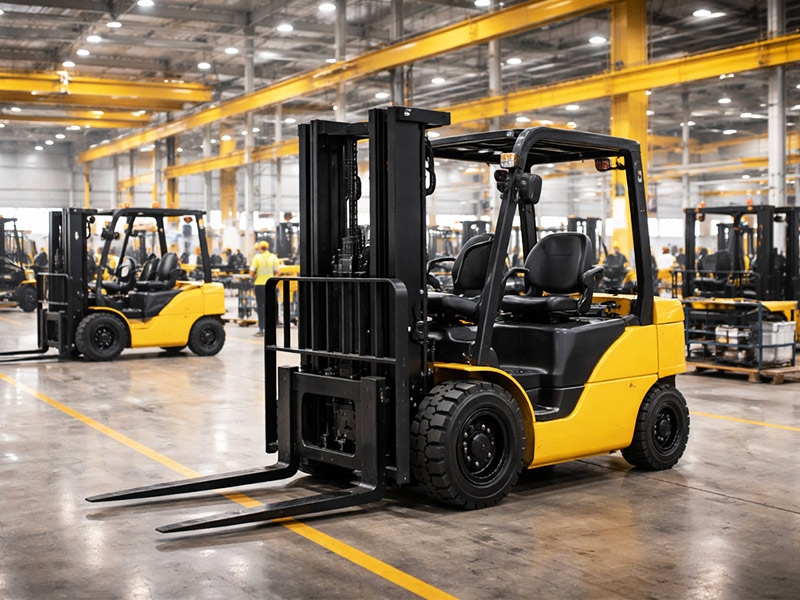
How to Choose the Right Forklift for Your Business
Choosing the right forklift is not simply about selecting a machine with the highest lifting capacity or the lowest price. Different industries, warehouse layouts, working environments, and operational demands require different forklift solutions.
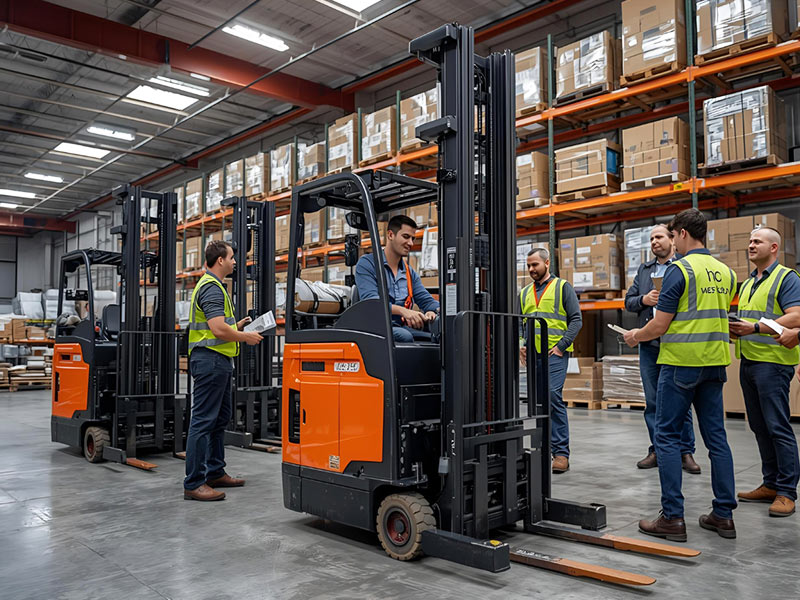
Best Forklift Solutions for Warehouse Operations
Modern warehouse operations depend heavily on efficiency, speed, and accurate material handling. As warehouses continue to face increasing order volumes, tighter delivery schedules, and higher operational demands, choosing the right forklift solution has become more important than ever.
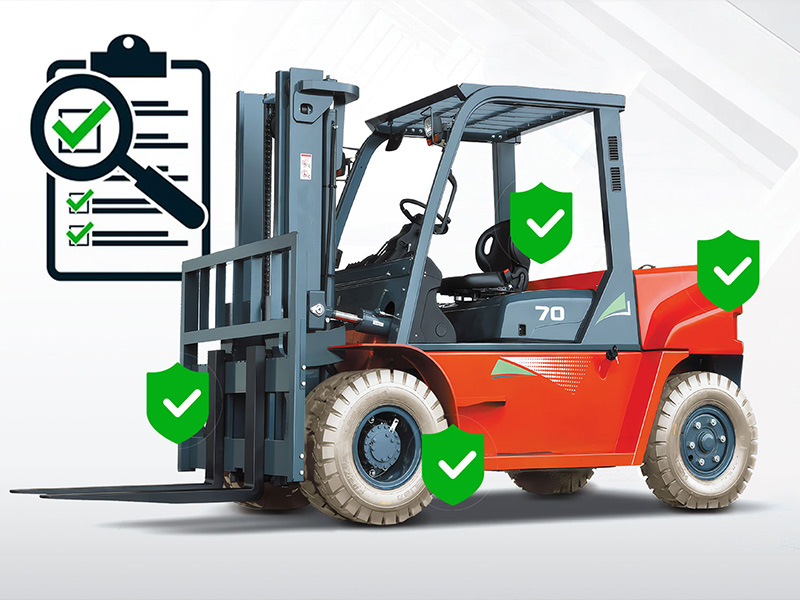
Daily Forklift Maintenance Checklist for Better Performance and Longer Service Life
Forklifts are essential equipment in warehouses, factories, logistics centers, and industrial handling operations. In many businesses, forklifts operate continuously for long hours every day, making regular maintenance extremely important for maintaining efficiency, safety, and operational reliability.